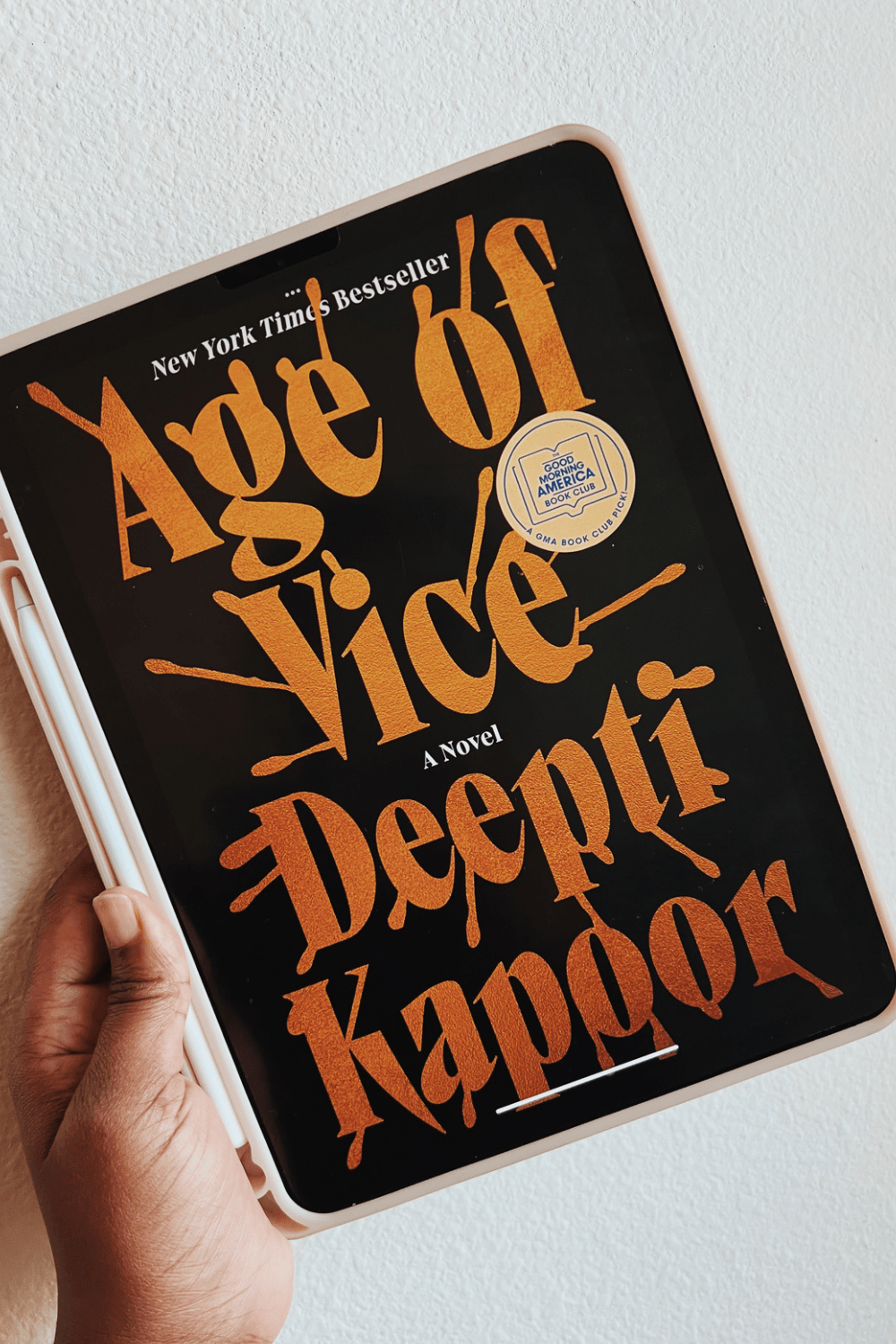
Judging a book by the cover
The cover alone was not enticing enough but I picked it up solely because it was recommended by Amerie’s book club.
Synopsis from goodreads.com
This is the age of vice, where money, pleasure, and power are everything,
and the family ties that bind can also kill.
New Delhi, 3 a.m. A speeding Mercedes jumps the curb and in the blink of an eye, five people are dead. It’s a rich man’s car, but when the dust settles there is no rich man at all, just a shell-shocked servant who cannot explain the strange series of events that led to this crime. Nor can he foresee the dark drama that is about to unfold.
Deftly shifting through time and perspective in contemporary India, Age of Vice is an epic, action-packed story propelled by the seductive wealth, startling corruption, and bloodthirsty violence of the Wadia family — loved by some, loathed by others, feared by all.
In the shadow of lavish estates, extravagant parties, predatory business deals and calculated political influence, three lives become dangerously intertwined: Ajay is the watchful servant, born into poverty, who rises through the family’s ranks. Sunny is the playboy heir who dreams of outshining his father, whatever the cost. And Neda is the curious journalist caught between morality and desire. Against a sweeping plot fueled by loss, pleasure, greed, yearning, violence and revenge, will these characters’ connections become a path to escape, or a trigger of further destruction?
Equal parts crime thriller and family saga, transporting readers from the dusty villages of Uttar Pradesh to the urban energy of New Delhi, Age of Vice is an intoxicating novel of gangsters and lovers, false friendships, forbidden romance, and the consequences of corruption. It is binge-worthy entertainment at its literary best.
Thoughts:
Deepti Kapoor wrote the introductions of all introductions. I have not been immediately invested in a book within the first few pages in a while as I was with Age of VIce. I like a book that always start with a conflict, then we spend the whole book trying to figure out what happened.
We are introduced to Ajay and his family troubles that eventually lead him to being sold into slavery. When he first arrived at the house of his master, I honestly thought that it was going to turn out good, that he was going to rise up in ranks, learn a few things, make money and then eventually rescue his mother and sister. It was a twist of turn when I Ajay finally ends up in Delhi. There again, I thought he was going to excel so much at his job that he would be given some wild opportunity that will make him a new man. In a way he was, but the thing about class is, you will always, almost be in the same class no matter how much wealth you acquire.
I am not sure how many generations in takes to move up in class, but it seems like, even with the acquire of wealth and knowledge, people always maintain in the same class. Although Ajay learned to mingle with Sunny and his people and earn more and more money, he was still looked at as the help and not a friend.
I think that was one of the most shocking bit of the book, where Sunny organized the accident to protect someone who was in his class and forfeit Ajay’s freedom. With everything that had happened prior, I assumed Sunny and Ajay had developed a friendship irrespective of their different socioeconomics, but when push came to shove, Sunny saved his own to preserve his father’s wealth.
Talk about giving into our vices. Sunny was the king of giving into all his vices. Having the life that he had, it is understanding that he would find comfort in every kind of vice that presented themselves to him. But I felt like he knew what he was doing to himself by engaging in all those drugs, partying, and alcohol, but he continued. I felt like he didn’t fight it hard enough.
For many people, it is not easy to go against your parents wishes, it is damn near impossible. Most people have this desire to please their parents, especially when your history is not of wealth but hardships, so I sympathized with Sunny. At the same time, he had numerous opportunities to do the right thing and fight the “system.” But considering how ruthless his father and uncle were, I understand why he felt he had to fall in line with what they are doing.
Back to Ajay, I didn’t understand all the killings. I wish we would have gotten more insight as to what was going on in his mind.
I think I understand the purpose of the events that happened while Ajay was in prison. Maybe the extent of Vicky’s power, but i found it so disturbing and I found it very hard to read. It was quite violent.
Another violent moment and character was Sunil Rastogi. His character was THE most unnecessary character to ever be in a book. He was violent and disgusting, and I would really love to hear the authors reason for adding his character. He didn’t add anything, but rather take away from the book.
I had high hoped for Neda and Sunny. But that relationship was just left high and dry. I enjoyed Neda’s character in the way the author discussed another sector of society we often ignore. The intellectuals who are higher middle class. Generally we focus on the very wealthy and very poor. The discussions between Neda and her boss, typically only concerns the people in the middle. As they are not directly affected by the greedy business deals that the rich make, but just the knowledge of it is infuriating to them and they take it upon themselves to expose corruption. Also, they typically go to the west, and attend universities, and think they can bring their intellectual foreign knowledge to their home country. Only to find out, the ideologies don’t even work in their home country.
Another thing I had not given thought to was when the poor become super rich but still live in the same land. In the book, one of the village people was complaining about how they became so rich by Sunny’s family taken over and all they could do was build mansions on a land that couldn’t sustain it. Also they became bored and had to give into alcohol, drugs, and wasting their lives, because they couldn’t do anything with their hands anymore. Their livelihood was destroyed. The things they found pride in like growing their own food was destroyed.
It made me think about how many people that live in big cities assume villagers want they same things. No one ever stops to asks them if they want new infrastructures, or that nice hotel, or fancy restaurant. People that live in big cities automatically think, people in rural areas or villages want the shiny lights and chaos.
That bit of the book really stood out to me and made me think of how I need to ask people what kind of help they need or want before assuming I know.
Overall, i enjoyed this book. It started out really well but I think there were so many relationships and topics that were not fully explored. The ending was a bit chaotic. I love a nicely wrapped ending.
Rating:
4/5


Leave a Reply